|
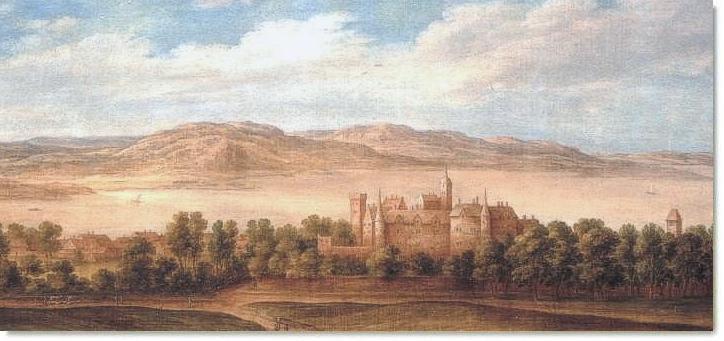
Former residence of the Seton's of Seton,
Knights of Seton, Lords
Seton, Winton and Winchburgh, and Earls of Winton.
The
centerpiece of the Seton Family was the Palace of Seton, standing on the same spot on the Seton
baronial lands for upwards of
eight hundred years, the
original castle was a square tower built during
the time of Seier de Seton sometime after 1066. It was
continually rebuilt and expanded by the successive heads of the
family, becoming a castle-complex after the time of William
Seton, 1st Lord Seton, c1348.
It was George, 6th Lord Seton, under
James V, who was responsible for the re-creation, and Mary de
Guise, the French wife of Scotland's King James V, was often
present. Prior to this, the Seton's had been much involved
in the affairs of Scotland's Royal Family, having the privilege of
their presence on many occasions, over successive generations,
with the family's munificent tastes being much sought after by the
Scotland's Monarch's as a place of relaxation and refuge.
It was enlarged to become a more commodious residence,
a Palace with a military character
and Italian and French styling, after the "rough wooing" by England's King
Henry VIII, and from whence it then became known as the "Palace of Seton": a magnificent Palatial
residence by the 6th Lord Seton and continued by the famed
George, 7th Lord Seton, and the 1st and 3rd Earls of
Winton.
George 7th Lord (called 5th of that name, referring
to that of 'George') "repaired the forepart of the house
of Seton, and especially that room called Samson's Hall (40 feet
in height), which he adorned with a roof of curious structure,
whereupon are twenty-eight large achievements, being those of
Scotland, France, Lorraine, and the noble families that were
allied to his family, curiously embossed and illuminate — the
most exact pieces of armories that are to be met with..."
|